Wistia's 2026 State of Video Report found that about 76% of teams resize or reformat their video for each platform rather than posting one file everywhere. Eight in ten B2B teams name LinkedIn their primary distribution channel.
Put those together and you get an unglamorous conclusion: reformatting is not an extra. It's the majority behavior, and it has been for a while. If you're a producer still delivering a single 16:9 master and treating versions as a change order, you're behind the median client.
I want to be careful here, because "make vertical cuts" is the most boring advice in marketing and it's been said badly for five years. The interesting part isn't the aspect ratio. It's what the aspect ratio forces you to do upstream.
Reformatting is a production decision, not a post decision
The failure mode I see constantly: a piece gets shot for horizontal, locked, and then somebody is asked to make it work vertically. What comes back is a center-crop with the sides chopped off, subject half out of frame, and any text that was comfortably placed now colliding with the edge.
That isn't a version. That's damage.
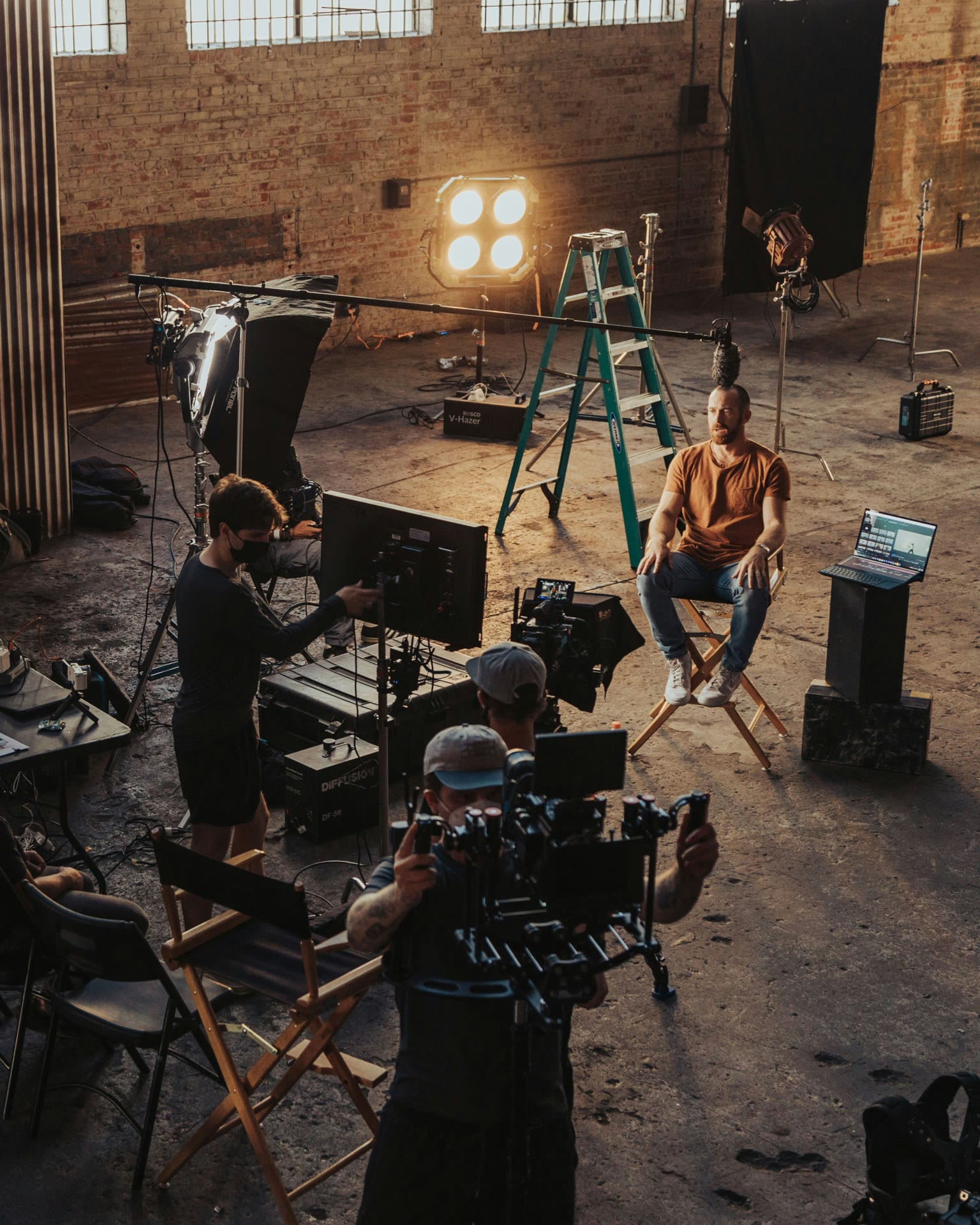
If you know at the outset that the piece lives in four places, that changes the shot, not the export. It changes where you place the subject in frame. It changes how much headroom you leave. It changes whether you shoot the interview slightly wide so there's room to punch in without losing the eyes. It changes whether the key line of dialogue happens while the subject is centered or drifting left.
None of that is fixable in post. All of it is free at the moment of shooting, if someone thought about it.
That's the real argument for treating distribution as a creative input. Not because vertical is important, but because deciding late is expensive and deciding early costs nothing.
Design for sound-off
The related discipline: a large share of mobile video is watched with the sound off. I've seen a specific percentage repeated widely, and I'm not going to quote it, because when I went looking for where it came from I found agency blogs citing agency blogs. The direction is not in dispute. The number is folklore.
Directionally, plan for it. That means:
Your first frame has to work as a still. If someone scrolls past with no audio and no context, does the opening image communicate anything? If the answer depends on the voiceover, you've built a radio ad with pictures.
Captions are craft, not accessibility compliance you bolt on at the end. Type placement, timing, and how much text sits on screen at once are design decisions. Auto-generated burn-ins in the platform's default font are the visual equivalent of shipping a first draft.
The thing you most need understood should be visible, not just audible. If the product name only exists in the narration, the majority of your audience never got it.
What I'd actually ask for
If you're commissioning work, the deliverables conversation should happen in pre-production, not at handoff. Concretely:
Name the platforms before the shoot, not after. Each one is a framing constraint.
Ask for the vertical version to be directed, not cropped. There's a real difference and you can see it immediately.
Ask what the piece communicates on mute. If nobody has an answer, that's the note.
Ask for a still frame you can use. You're going to need one for the thumbnail, the email, and the deck anyway, and pulling it from motion footage is worse than shooting it.
Why this matters more than it used to
Play counts grew year over year in 2025 across companies of every size while budgets stayed flat or shrank. More output, same money. That gap gets closed somewhere, and usually it gets closed by squeezing production quality or squeezing the producer.
The third option is to stop wasting the shoot. Most teams already own footage that could have produced four usable assets and produced one, because nobody decided that at the front end. Reformatting done properly isn't extra work bolted onto the job. It's the difference between one asset and a campaign, decided before anyone unpacks a case.